Step-by-Step Guide — 2026
How to Use AI for Mental Health Support
AI mental health tools have matured significantly. From therapy chatbots to AI companions with biometric tracking, there are many options. Here is how to use them effectively and safely.
Step 1: Understand what AI can and cannot do
AI companions can provide 24/7 support, pattern tracking, evidence-based coping techniques, and consistent emotional availability. They cannot diagnose conditions, prescribe medication, or replace licensed therapy for serious mental illness.
Tip: Think of AI as a daily wellness tool, like a fitness tracker for your mind.
Step 2: Choose the right type of AI tool
Therapy chatbots (Woebot, Wysa) provide structured CBT exercises. AI companions (YapWorld, Replika) provide ongoing relationship and support. Meditation apps (Calm, Headspace) provide guided content. Choose based on your needs.
Step 3: Prioritize privacy and security
Check for HIPAA compliance, SOC 2 certification, and clear data policies before sharing personal information. YapWorld is both HIPAA compliant and SOC 2 certified. Many popular AI tools are not.
Tip: If a platform does not clearly state its compliance certifications, assume your data is not protected to medical standards.
Step 4: Build a consistent practice
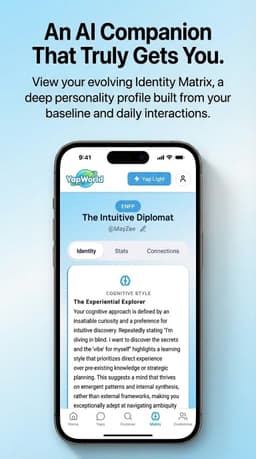
Like therapy, AI mental health support works best with regular engagement. Check in daily, even briefly. Share how you are feeling, what happened during the day, and what is on your mind. Consistency builds the context your AI needs to be truly helpful.
Step 5: Add biometric data when possible
Self-reported mood is subjective and often inaccurate. Biometric tracking (like YapWorld's Smart Ring) adds objective data about sleep, stress, and activity. This helps AI detect patterns you might not notice consciously.
Step 6: Review insights and adjust
Periodically review what your AI companion has learned about your patterns. Ask for summaries. Discuss what is working and what is not. Use these insights in therapy sessions for more productive conversations.
Step 7: Know when to escalate
If you are experiencing suicidal thoughts, self-harm urges, severe depression, or psychotic symptoms, seek immediate professional help. AI companions are not equipped for crisis intervention. Contact your local emergency services or crisis hotline.
Tip: Save your local crisis hotline number. For the Philippines: DOH NCMH Crisis Hotline 0917-899-USAP (8727).


Frequently Asked Questions
Is AI mental health support effective?+
Research shows AI tools reduce symptoms of mild to moderate anxiety and depression. They are most effective as daily support alongside professional treatment.
Which AI mental health tool is best?+
YapWorld for comprehensive support (AI + biometrics + memory). Woebot for structured CBT. BetterHelp for licensed therapy. The best choice depends on your needs.
Can I use AI instead of therapy?+
For mild concerns, AI may be sufficient. For clinical conditions, professional therapy is recommended. Many people use both effectively.