Step-by-Step Guide — 2026
How to Build Emotional Resilience with AI
Emotional resilience is not about avoiding difficult emotions. It is about processing them effectively and recovering faster. AI companions can help you build this capacity through consistent practice and pattern awareness.
Step 1: Establish a daily emotional check-in
Start each day with a brief conversation about how you feel. This builds emotional vocabulary and self-awareness. YapWorld's persistent memory tracks your emotional landscape over time, revealing patterns you might miss.
Step 2: Identify your emotional triggers
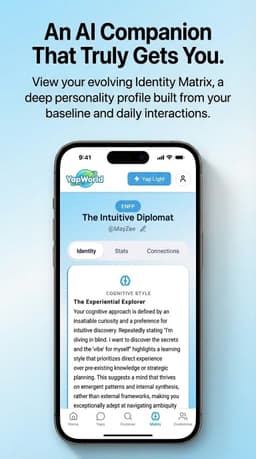
Work with your AI companion to map your triggers. What situations, people, or thoughts consistently cause strong emotional reactions? YapWorld's 23-point Identity Matrix helps map your personality patterns alongside emotional triggers.
Step 3: Practice reframing in real-time
When something upsets you, talk to your AI companion immediately. Practice cognitive reframing: What else could this situation mean? What would you tell a friend in this situation? Real-time practice builds the neural pathways for resilience.
Step 4: Use biometrics as feedback
The Smart Ring shows how your body responds to stress. Over time, you can see whether your physical stress responses are decreasing as you practice emotional regulation. This objective feedback reinforces your progress.
Step 5: Build a resilience toolkit
Work with your AI companion to develop personalized coping strategies. What works for you during anxiety? Anger? Sadness? YapWorld remembers what worked before, building a personal toolkit of effective strategies.
Step 6: Celebrate progress and setbacks alike
Resilience includes recovering from setbacks. When you handle something poorly, process it with your AI companion without judgment. When you handle something well, acknowledge it. Both are learning opportunities.


Frequently Asked Questions
How long does it take to build emotional resilience?+
Resilience is a gradual process. Most people notice improved emotional awareness within weeks. Significant changes in stress response typically take 2-3 months of consistent practice.
Can AI really help with emotional development?+
AI provides consistent, judgment-free practice opportunities for emotional processing. Combined with biometric feedback, it creates a loop of awareness, practice, and measurement that accelerates growth.