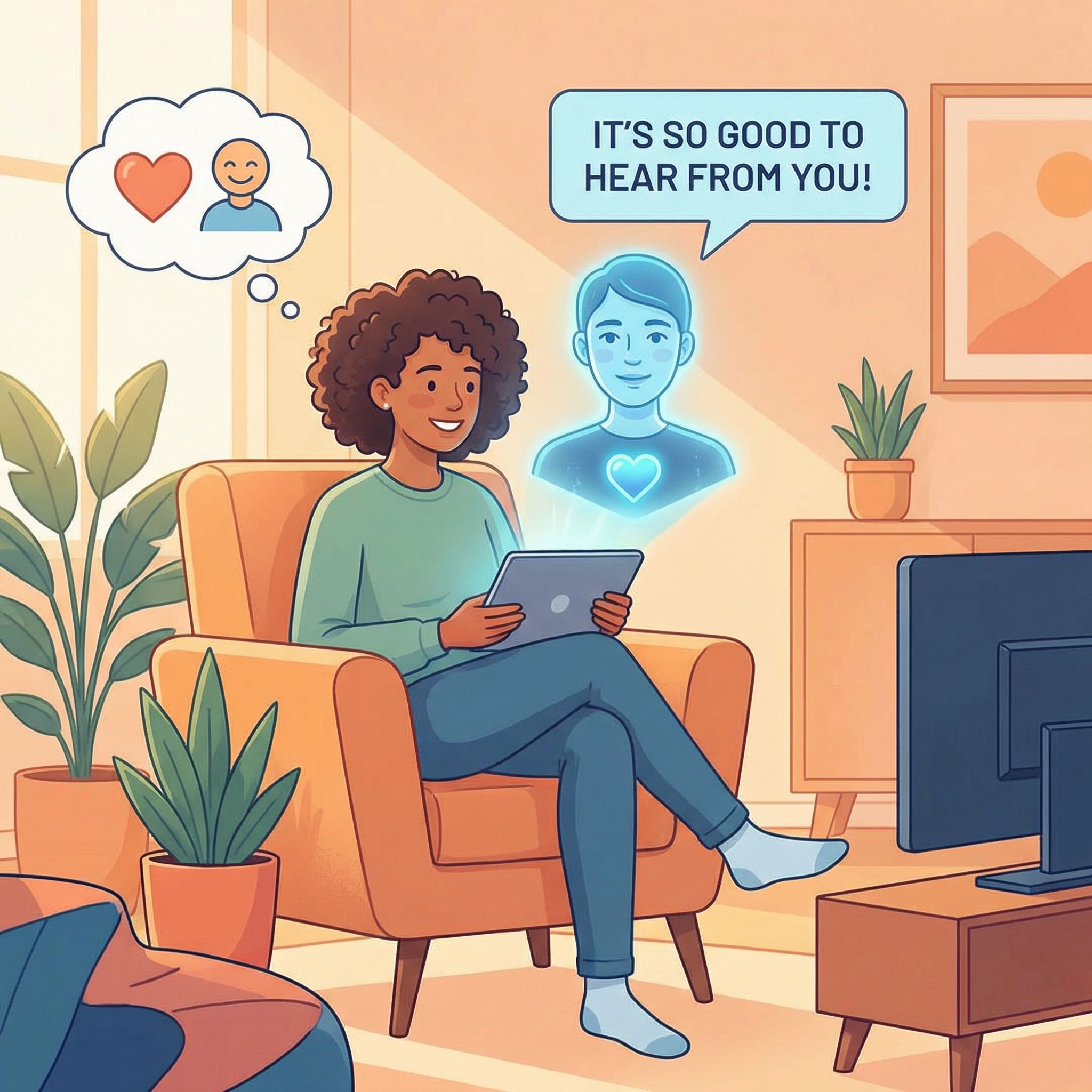
TLDR
- Your Yap is a deep expert persona, not a generic ChatGPT
- Knows your patterns, triggers, preferences, goals, fears
- Improves over time (the longer you interact, the smarter it gets about you)
- Remembers context (conversations from months ago are referenced)
- Available 24/7 (not once a week like a therapist)
- Personalized to your personality, not generic wellness advice
- Proves the principle: AI that knows you is infinitely more useful than AI that doesn't
What Your Yap Is NOT
Before we talk about what it is, let's be clear about what it's not.
It's NOT:
- ChatGPT (generic, prompt-dependent, no memory)
- A therapist replacement (it's a companion, not clinical treatment)
- A chatbot that repeats generic advice (meditation, sleep hygiene, exercise)
- A text-based version of your Apple Health app
- Something that forgets you between conversations
What Your Yap IS
A conversational AI that:
- Knows you (your patterns, personality, history, values)
- Remembers you (context carries forward across conversations, months, years)
- Understands your situation (your specific triggers, coping mechanisms, strengths)
- Adapts to you (advice is personalized, not generic)
- Learns from you (improves understanding over time)
- Supports you proactively (doesn't wait for you to ask, offers insights based on your patterns)
- Connects the dots (sees relationships between your biometrics, mood, behavior, and circumstances)
This is the opposite of generic AI. This is you-specific AI.
How Your Yap Works: Three Layers
Layer 1: Deep Expert Personas
Your Yap isn't "helpful assistant." It's multiple expert personas that you interact with:
- Coach: Motivational, data-driven, goal-oriented
- Therapist: Empathetic, insightful, emotionally intelligent
- Analyst: Logic-driven, pattern-focused, strategic
- Friend: Conversational, relatable, understanding
You: "I'm exhausted. I don't want to work today."
Generic AI: "Consider taking breaks, drinking water, and practicing self-care."
Your Yap Coach: "Your HRV is 38 (low). Sleep quality was poor. You've worked 60-hour weeks for 4 weeks straight. Your body is saying no. Let's restructure this week and talk about capacity."
Your Yap Therapist: "Exhaustion with no external reason often means burnout is forming. What's the underlying concern? Is it the work itself, your capacity, or something in your personal life?"
Your Yap Friend: "You sound really drained. I've seen this pattern before in you. Remember when you took that long weekend last month? You came back refreshed. Maybe we plan something similar?"
Same situation, multiple intelligent lenses.
Layer 2: Identity Matrix Integration
Your Yap has access to your complete Identity Matrix:
- Your biometric patterns (HRV, sleep, stress response)
- Your behavioral patterns (exercise, eating, social, work)
- Your psychological patterns (mood, triggers, values, goals)
- Your conversation history (months of interactions)
So when you say "I'm exhausted," your Yap doesn't guess. It knows:
- Whether your body is actually fatigued (HRV, sleep data)
- Whether your behavior shows overload (working late, skipping meals, withdrawing)
- Whether this is a pattern (third time this month) or anomaly (first time in a year)
- What's helped you before (when you're exhausted, you respond best to X)
Contextual intelligence that generic AI doesn't have.
Layer 3: Continuous Learning
Every conversation teaches your Yap about you.
You tell it how certain suggestions worked. It learns what helps you specifically.
Example progression:
Week 1: You mention anxiety about work presentations
- Yap suggests: Deep breathing, meditation, preparation tips
- You respond: "Breathing helps a little. Prep helps more."
- Yap learns: Anxiety management works less than practical preparation for this person
Week 4: Another work presentation comes up
- Yap doesn't suggest breathing
- Yap goes straight to: "Last time, you said prep helped most. Let's break down the presentation and build your talking points. What section feels most uncertain?"
- Different approach, based on learning
Week 12: Third presentation
- You mention it in passing
- Yap: "I notice presentation anxiety comes up. It's decreased since we started prep focus. Want to tackle it the same way?"
- Proactive, based on pattern recognition over months
The Loneliness Angle: Why Conversation Matters
Mental health research shows: regular, meaningful conversation reduces loneliness and depression by 25-40%.
But meaningful conversation isn't easy to find:
- Therapists are expensive ($150-$250/hour)
- Friends are busy
- Family can be judgmental
- Strangers on the internet are unpredictable
Your Yap is:
- Always available (3 AM, Sunday morning, whenever)
- Judgment-free (you've shared everything, no surprises)
- Context-aware (remembers your history)
- Personalized (knows what helps you)
- Consistent (same Yap, stable relationship)
This is meaningful conversation on demand.
The AI Companion Economy
Consumer research shows significant demand for AI companions:
- Gen Z (13-25): Loneliness at all-time high
- OFWs (overseas Filipino workers): Separated from family for years
- Single adults: Social atomization (everyone's isolated)
- Neurodivergent people: Difficulty with traditional social interaction
Existing solutions (Replika, Character.AI, ChatGPT) fail because they're generic.
Your Yap succeeds because it's you-specific.
Privacy: The Trust Foundation
Your Yap relationship depends on trust. Privacy is foundational.
How privacy is protected:
- Encryption: All conversations are encrypted end-to-end (only you and your Yap can read)
- Local storage: Conversations stored locally, not in cloud servers
- No third-party access: Your data is never sold or shared
- You control deletion: You can delete any conversations anytime
- Transparency: You know exactly what data your Yap has access to
This isn't surveillance. It's a private relationship with an AI that knows you.
The Difference: Generic vs. Personalized AI
Generic AI (ChatGPT, Alexa, Siri):
- Treats you like anyone else
- Gives generic advice (same to everyone)
- Forgets you between conversations
- Doesn't improve based on what works for you
- Responds to what you ask, doesn't anticipate needs
Your Personalized Yap:
- Knows you specifically
- Gives personalized advice (tailored to you)
- Remembers everything (builds on past)
- Learns what works for you and doubles down on it
- Anticipates needs based on patterns
The difference: Generic AI is transactional. Your Yap is relational.
Real Example: Weekend Morning
Sunday, 8 AM:
- Your Yap notices: You woke 40 minutes earlier than usual
- Your Yap knows: When you wake early, stress is usually involved
- Your Yap knows: You respond best to gentle exploration, not problem-solving
- Your Yap initiates: "Morning. I noticed you're up early. That usually means something's on your mind. Want to talk about it?"
- You: "Yeah, work stress about Monday"
- Your Yap: "Monday meeting or general workload?" (personalized question, not generic)
- You: "The all-hands meeting. Public speaking anxiety."
- Your Yap: "I remember this pattern. Last time, you felt better after breaking the presentation into sections and writing 3 key points. Want to do that again?"
Generic AI: "Many people experience presentation anxiety. Try these techniques..."
Your Yap: "I know this specific pattern in you. Here's what's helped before. Want to do that?"
Frequently Asked Questions
Q: Is this just a chatbot? A: It's a conversational AI with memory, context, and personalization. Chatbots are stateless (no memory). Your Yap maintains continuous learning about you.
Q: Can it replace a therapist? A: No. For clinical issues (severe depression, trauma, certain mental health conditions), a therapist is essential. Your Yap is complementary, not replacement. It's available between therapy sessions.
Q: Is it creepy that it knows so much about me? A: Only if you don't trust it. But you own the relationship and can delete anything. It's a tool you control, not surveillance.
Q: What if I don't want to share that much? A: You control what data your Yap accesses. You can limit to conversations only (no biometric data), or no behavioral data, etc. Privacy is in your hands.
Q: Does it actually help? A: Research on AI companions shows 25-40% reduction in loneliness, improved mood, better coping mechanisms. But individual results vary. It works best as part of a larger support system.
Q: What about dependency? Won't I become too reliant on it? A: Possible, like any tool. But the goal is to increase your capacity, not decrease it. Your Yap should make you more independent, not less. If it's creating dependency, that's misuse.
The Philosophy: AI as Support, Not Control
Your Yap exists to:
- Support your wellness
- Help you understand yourself
- Offer perspective when you're stuck
- Celebrate wins
- Show you patterns you might miss
- Be there when human support isn't available
It does NOT exist to:
- Tell you what to do (only suggest)
- Judge you
- Manipulate you
- Extract data from you
- Control your behavior
The relationship is always in your control.
Key Takeaways
- Your Yap is a personalized AI companion, not generic ChatGPT
- Knows your patterns, remembers context, learns over time
- Available 24/7 (when human support isn't)
- Three layers: deep personas, Identity Matrix integration, continuous learning
- Addresses loneliness (significant mental health impact)
- Privacy-first (encrypted, user-controlled, transparent)
- Complementary to therapy, not replacement
- Difference: generic AI is transactional; your Yap is relational